🧠 The Sci-Fi Future is Now
The direct connection between the human brain and computers, a staple of science fiction for decades, is rapidly transitioning into reality. Brain-Computer Interface (BCI) technology has made monumental strides recently, poised to revolutionize healthcare, communication, and human capability itself. While Neuralink captures headlines, it's no longer the sole contender. A host of companies are entering the arena with potentially superior or safer approaches. This analysis dives into the current state of BCI and the competitive landscape shaping our neurotech future.
⚙️ Core Technologies & Approaches
At its heart, BCI involves reading electrical brain signals to control external devices or writing signals back to the brain. Current research primarily focuses on two distinct methodologies.
Invasive vs. Non-Invasive
- Invasive BCI: The approach championed by Neuralink, involving micro-electrodes implanted directly into brain tissue. Offers unparalleled signal fidelity and resolution but carries the risks of brain surgery.
- Non-Invasive BCI: Measures brainwaves (EEG) via sensors on the scalp. Much safer but suffers from lower signal accuracy, resolution, and speed compared to invasive methods.
Key Application Areas
- Medical Rehabilitation: Restoring motor function for stroke or spinal cord injury patients.
- Neuropsychiatry: Treating brain disorders like depression and OCD.
- Human Augmentation: Enhancing memory, creating new senses, and direct brain-to-brain communication.
🔬 Comparative Analysis of Key Players
The BCI market has ignited into a fierce competition post-Neuralink. The table below compares the technological specs and status of major contenders.
| Company | Tech Approach | Key Differentiator | Current Stage |
|---|---|---|---|
| Neuralink | Invasive (N1 Chip) | Ultra-high density electrodes (1024 channels), wireless charging/data, robotic surgery | First-in-human clinical trials ongoing |
| Synchron | Minimally Invasive (Stentrode) | 'Stentrode' delivered via blood vessels, significantly lower surgical risk | First FDA-approved fully implantable BCI |
| Precision Neuroscience | Invasive (Layer 7) | Thin-film electrode array designed to minimize tissue damage | Pre-clinical (animal testing) |
| Blackrock Neurotech | Invasive | Over 20 years of R&D, leader in medical BCI (movement/speech restoration) | Already deployed in hundreds of patients |
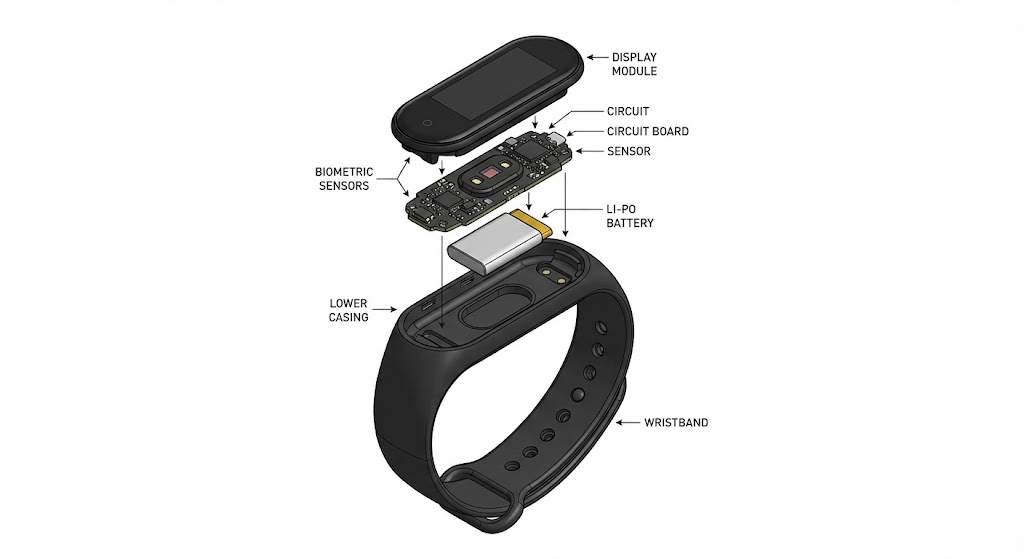
| Meta (Reality Labs) | Non-Invasive (EMG) | Wristband form factor, decodes movement intent via electromyography (EMG) signals | Research & Development phase |
As the table illustrates, the core trade-off is Safety (Synchron) vs. Precision (Neuralink). Furthermore, the entry of Big Tech like Meta signals a push towards consumer applications, potentially integrating BCI with social media and the metaverse.
🚀 Conclusion: Ethical Imperatives and Our Neuro-Future
While BCI technology began with the noble goal of overcoming disabilities, its trajectory is swiftly expanding into the realm of 'human enhancement.' The ethical and societal discourse is struggling to keep pace with this rapid technological evolution.
Critical Considerations & Caveats
- Privacy & Cognitive Liberty: The risk of our most intimate data—our thoughts—being hacked or surveilled.
- Societal Inequality: The potential for a new divide between 'enhanced' and 'natural' humans due to high costs.
- Identity & Agency: What does it mean to be human when our minds are partially machine?
Brain-Computer Interfaces are more than just gadgets; they are tools that force us to re-examine the very definition of humanity. While we cannot halt progress, it is imperative that we build robust philosophical and ethical frameworks in parallel with the technology itself. The future of our minds depends on it. 🔮